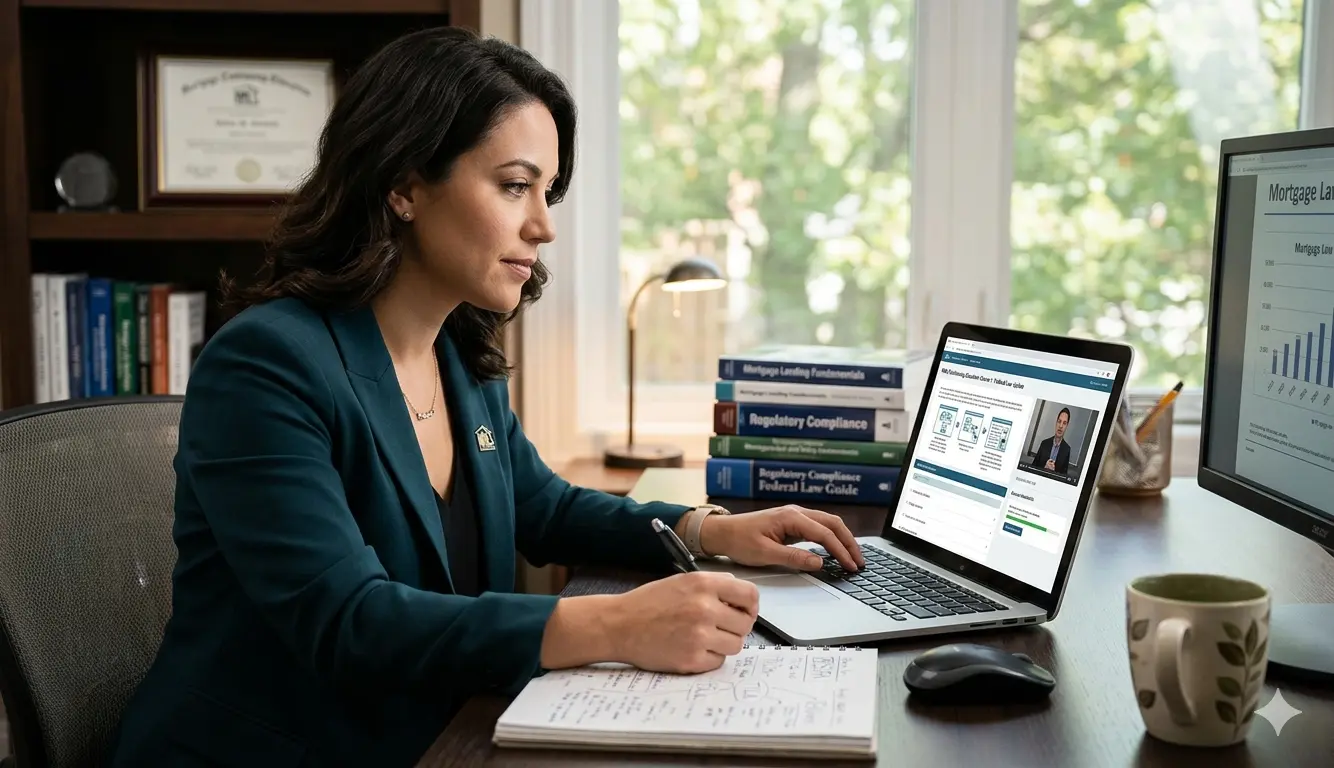
Mortgage Loan Originator Education Requirements: Complete MLO Licensing Guide
If you want to become a mortgage loan originator, education is one of the first major steps in the licensing process. Before most state-licensed MLOs can originate residential mortgage loans, they must complete required pre-licensing education, pass the required exam, apply through NMLS, and satisfy state-specific licensing rules.
The standard national education requirement for state-licensed mortgage loan originators is 20 hours of NMLS-approved pre-licensing education. This requirement comes from the SAFE Act, which created national minimum standards for mortgage loan originator licensing.
However, the 20-hour requirement is only the starting point. Some states require additional state-specific education. Some require certain topics to be included within the 20 hours. Others require separate state law courses. That is why future MLOs should understand both the national requirement and the specific rules for the state where they plan to become licensed.
What Is a Mortgage Loan Originator?
A mortgage loan originator, often called an MLO, is a professional who helps consumers apply for residential mortgage loans. MLOs may discuss loan options, collect borrower information, assist with mortgage applications, and help borrowers understand loan terms.
Because mortgage loan originators work directly with borrowers during one of the largest financial decisions most people will ever make, the industry is heavily regulated. Licensing education helps ensure that MLOs understand mortgage law, ethics, fair lending, fraud prevention, consumer protection, and loan product standards before working with the public.
What Are the Education Requirements to Become an MLO?
Most state-licensed mortgage loan originators must complete at least 20 hours of NMLS-approved pre-licensing education before becoming licensed.
The standard SAFE Act education requirement includes:
- 3 hours of federal law and regulations
- 3 hours of ethics, including fraud, consumer protection, and fair lending
- 2 hours of nontraditional mortgage lending
- 12 hours of mortgage origination instruction or electives
This 20-hour course is commonly referred to as the 20-hour SAFE course, NMLS pre-licensing education, MLO pre-license education, or mortgage loan originator licensing education.
What Does MLO Pre-Licensing Education Cover?
MLO pre-licensing education is designed to prepare future mortgage professionals for both the licensing exam and the responsibilities of working with borrowers.
Federal Mortgage Law
The federal law portion covers key laws and regulations that affect mortgage loan origination. These may include consumer protection rules, disclosure requirements, advertising standards, licensing obligations, and federal compliance expectations.
Ethics, Fraud, and Fair Lending
The ethics portion focuses on professional conduct, fair treatment of borrowers, fraud prevention, consumer protection, and fair lending. This is one of the most important parts of MLO education because loan originators are trusted to guide consumers through complex financial decisions.
Nontraditional Mortgage Lending
The nontraditional mortgage lending section covers loan products and lending structures beyond basic traditional mortgage scenarios. It helps future MLOs understand product risk, borrower suitability, payment structures, and compliance considerations.
Mortgage Origination Instruction
The remaining hours may cover broader mortgage origination topics, such as loan programs, application procedures, underwriting concepts, borrower communication, documentation, and the mortgage process from application through closing.
Do MLO Education Requirements Vary by State?
Yes. The SAFE Act sets a national minimum standard, but individual states may require more education. Some states accept the standard 20-hour course. Others require state-specific law hours, additional pre-licensing education, or separate state content.
For example, one state may require only the 20-hour national course. Another state may require the 20-hour course plus state-specific law. A third state may require additional education above the national minimum.
This is why students should never assume that one course automatically satisfies every state. Before enrolling, confirm the requirements for the state where you plan to apply for your MLO license.
What Is NMLS?
NMLS stands for the Nationwide Multistate Licensing System. It is the licensing system used by state agencies to manage mortgage loan originator licensing, education records, testing, renewals, and compliance information.
When you complete NMLS-approved education, the course provider reports your completion to NMLS. Your education record is then used as part of your licensing application. NMLS also tracks continuing education once you become licensed and need to renew each year.
Is Education the Only Requirement to Become an MLO?
No. Education is only one part of becoming a mortgage loan originator. Most applicants must also satisfy testing, background check, credit report, and application requirements.
The typical MLO licensing path includes:
- Complete required NMLS-approved pre-licensing education
- Pass the required SAFE MLO test
- Create or update an NMLS account
- Submit the MLO license application
- Authorize a criminal background check
- Authorize a credit report
- Submit fingerprints where required
- Meet state-specific licensing requirements
- Receive license approval from the state agency
Exact requirements can vary by state, so applicants should review the licensing checklist for the state where they plan to become licensed.
Can MLO Education Be Completed Online?
Yes. Many students complete mortgage loan originator education online. NMLS-approved courses may be available through online self-paced formats, instructor-led online classes, live webinars, or classroom options, depending on the provider and state requirements.
Online MLO education can be especially helpful for students who are working full-time, changing careers, or preparing for licensing while managing a busy schedule.
Before choosing a course, make sure it is NMLS-approved and appropriate for your state licensing goal.
What Happens After You Complete MLO Pre-Licensing Education?
After completing your pre-licensing education, your provider reports completion to NMLS. Once your education is reflected in your NMLS record, you can continue with the next steps in the licensing process.
For many students, the next major step is preparing for and passing the SAFE MLO test. The exam is designed to measure knowledge of mortgage laws, ethics, loan origination activities, uniform state content, and related industry topics.
Education gives you the foundation, but exam preparation is still important. Students should review course materials, understand key mortgage terms, and prepare for scenario-based questions before taking the test.
Do Mortgage Loan Originators Need Continuing Education?
Yes. After becoming licensed, most state-licensed mortgage loan originators must complete annual continuing education to renew their license.
The standard annual NMLS continuing education requirement is generally 8 hours. This typically includes federal law, ethics, nontraditional mortgage lending, and an elective or state-specific hour. Some states require additional state-specific CE.
In simple terms, pre-licensing education gets you licensed. Continuing education helps you stay licensed.
MLO Education Checklist
Before starting your mortgage loan originator education, use this checklist:
- Confirm the state where you want to become licensed
- Review that state’s NMLS licensing checklist
- Choose an NMLS-approved pre-licensing course
- Confirm whether state-specific education is required
- Complete the required 20-hour SAFE course
- Allow time for course completion to be reported to NMLS
- Prepare for the SAFE MLO test
- Submit your license application through NMLS
- Complete background check, credit report, and fingerprint requirements
- Plan ahead for annual continuing education after licensing
Complete Mortgage Loan Originator Education With Mortgage Education
Mortgage Education helps future and current mortgage professionals complete required education with clear, practical course options. Whether you are preparing for your first MLO license, completing state-specific education, or planning for annual continuing education, choosing the right education provider can make the licensing process easier to understand.
Mortgage loan originator education is more than a regulatory requirement. It is the foundation for a career helping borrowers navigate one of the most important financial decisions of their lives.
If you are ready to begin your MLO licensing journey, start by confirming your state requirements, selecting the correct NMLS-approved course, and building a clear path from education to exam preparation to license application.
Frequently Asked Questions About Mortgage Loan Originator Education Requirements
How many hours of education are required to become a mortgage loan originator?
Most state-licensed mortgage loan originators must complete at least 20 hours of NMLS-approved pre-licensing education before becoming licensed. Some states require additional state-specific education.
What is included in the 20-hour MLO pre-licensing course?
The standard 20-hour SAFE Act course includes 3 hours of federal law, 3 hours of ethics, 2 hours of nontraditional mortgage lending, and 12 hours of mortgage origination instruction or electives.
Do MLO education requirements vary by state?
Yes. The SAFE Act establishes a national minimum, but individual states may require additional state-specific pre-licensing education.
Can mortgage loan originator education be completed online?
Yes. NMLS-approved MLO education may be available online, depending on the provider, course format, and state requirements.
Do mortgage loan originators need continuing education?
Yes. After licensing, most state-licensed MLOs must complete annual NMLS-approved continuing education to renew their license.
Is pre-licensing education the same as continuing education?
No. Pre-licensing education is completed before becoming licensed. Continuing education is completed after licensing to maintain and renew an active license.